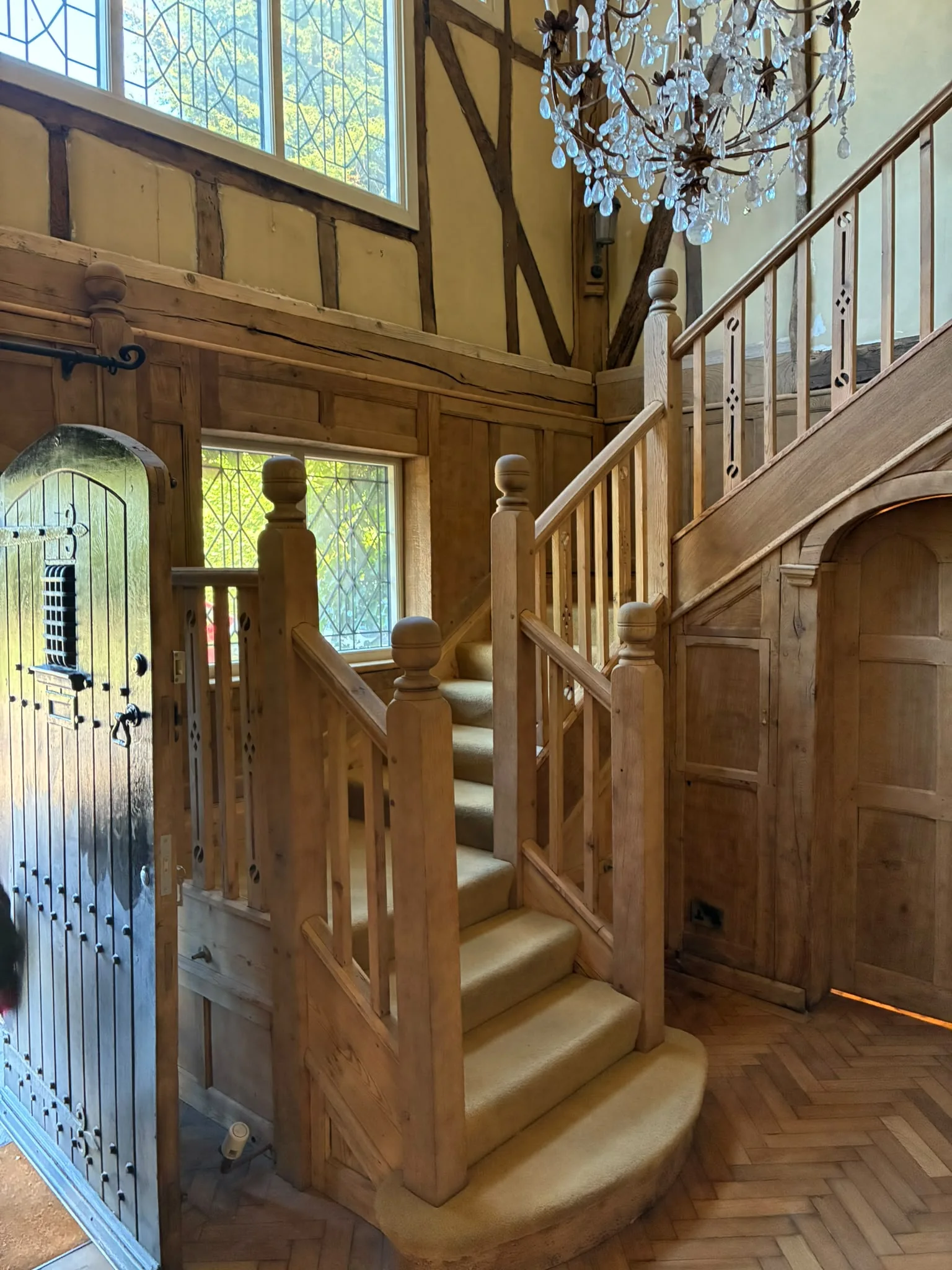
A detailed timber staircase was carefully refreshed to bring out the warmth, grain and fine joinery of the stair components. The finished result presents a clean, even natural appearance across the handrail, newel posts, balusters and stair panels while retaining the character of the original interior.
Premier Blasting group work — exact site location not published
The restoration focused on the visible timber staircase and its detailed balustrade, including the handrail, substantial newel posts, turned and twisted spindles, supporting rails and adjacent stair panels. Surface preparation was planned around the delicate profiles so accumulated finish and surface dullness could be lifted without flattening the carved detail, leaving the timber ready for a suitable protective finish.
Planning something similar?
Send a photo of your surface and tell us what you want to achieve.
Tell us what looks similar, what is different and the finish you have in mind. Photos, approximate dimensions and access notes are the most useful place to begin.
Related projects
Explore more work on similar surfaces.
More documented oak surfaces, selected first for matching materials and then for the closest service or project category.
A carefully restored open-tread timber staircase, refreshed by removing its heavy black coating while protecting the character of the ornate joinery. Gentle surface preparation brought definition back to the treads and exposed a warmer, more natural timber appearance ready for a considered finishing system.
A tired, heavily stained staircase was carefully restored to give the hallway a lighter, cleaner starting point for its next finish. Birmingham Sandblasting used controlled, low-impact surface preparation to lift the aged coating and scuffing while retaining the character and detail of the timber joinery.
A dark, heavily finished hall was carefully brought back to a lighter, natural feel, revealing the grain and detail in the original staircase, wall panelling and architectural timber.