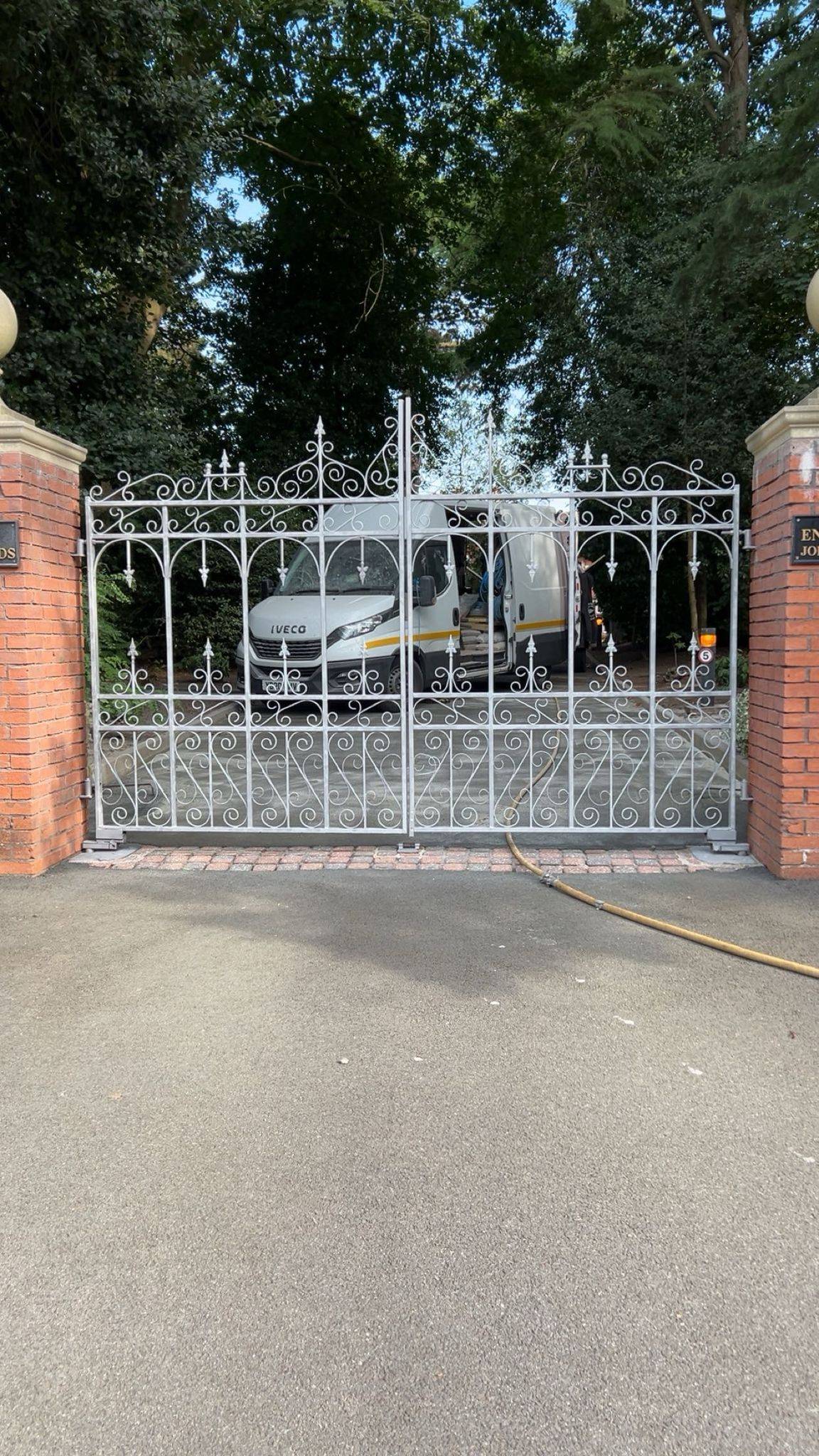
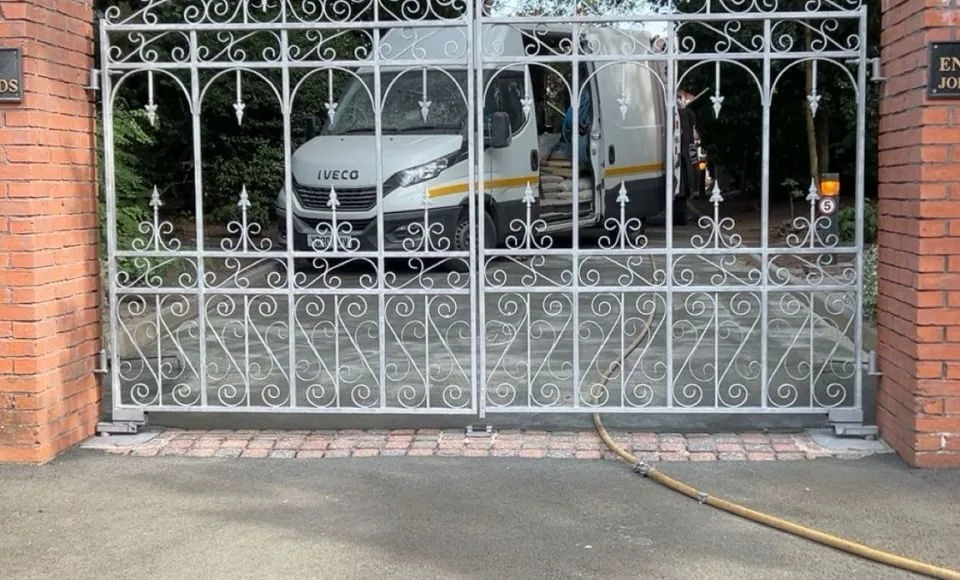
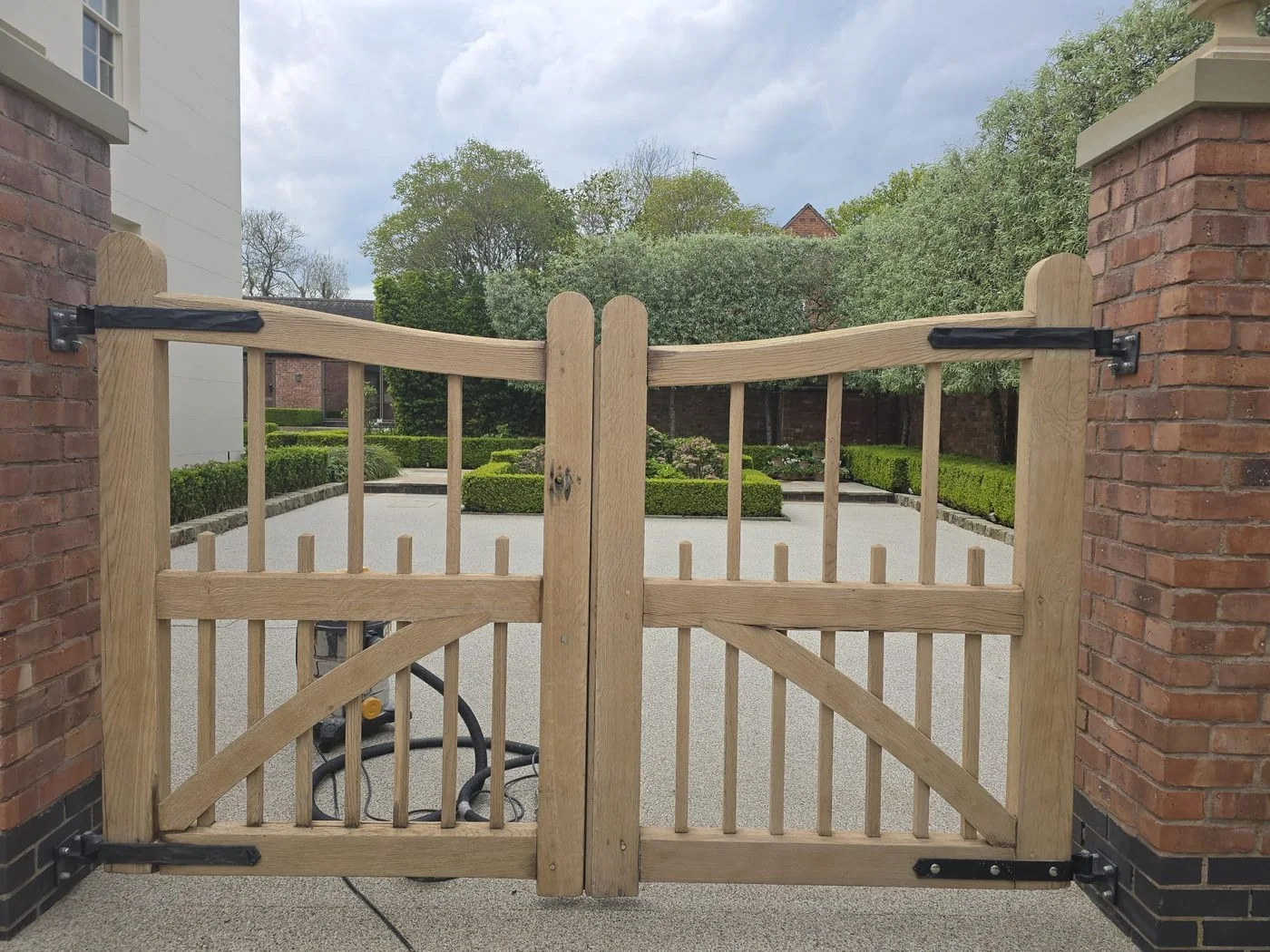
A tired steel gate was given a careful new beginning. Birmingham Sandblasting used controlled, surface-conscious cleaning to lift failing paint and accumulated grime while respecting the gate's profiles and decorative details. The result was a clean, even metal surface ready for a durable protective finish and a smarter entrance appearance.
Premier Blasting group work — exact site location not published
Move the divider across the original documented images to compare the condition before preparation with the completed restoration.
BeforeAfter‹›Drag to compare
What was needed
How the surface was prepared.
Assess and protect the gate and surrounding area; remove loose, weathered coatings and surface contamination with a controlled low-impact blasting approach; work progressively around the frame, rails, joints and details; check for an even, sound substrate; and leave the gate prepared for priming and repainting. The emphasis was on measured restoration rather than aggressive removal that could mark or distort the metal.
Planning something similar?
Send a photo of your surface and tell us what you want to achieve.
Tell us what looks similar, what is different and the finish you have in mind. Photos, approximate dimensions and access notes are the most useful place to begin.
Related projects
Explore more work on similar surfaces.
More documented steel surfaces, selected first for matching materials and then for the closest service or project category.
A careful surface-restoration treatment for metal gates affected by failing black paint and exposed weathering. Birmingham Sandblasting used a controlled, gentle blast-cleaning approach to lift loose coating and surface contamination while preserving the gate profiles and details, leaving an even metallic finish ready for a suitable primer and protective topcoat.
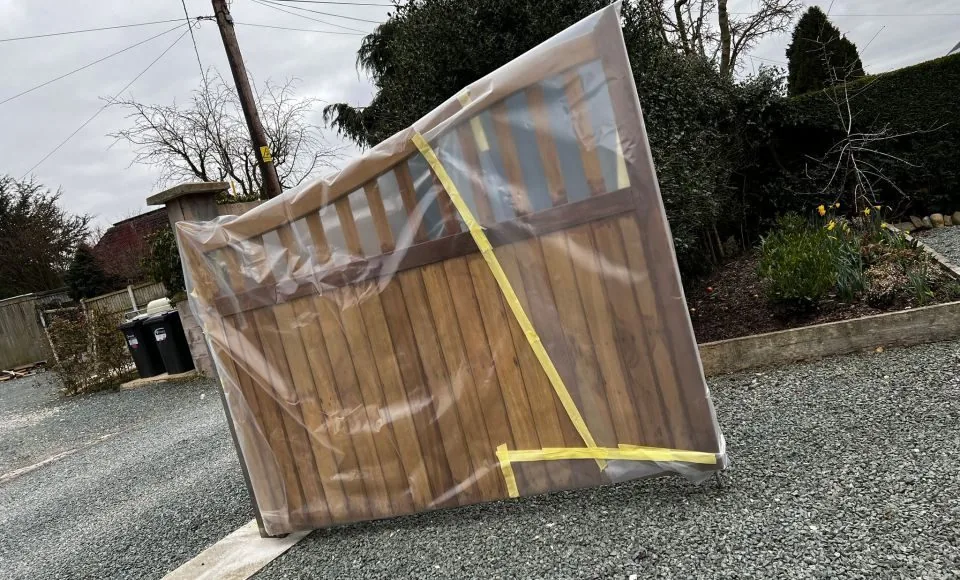
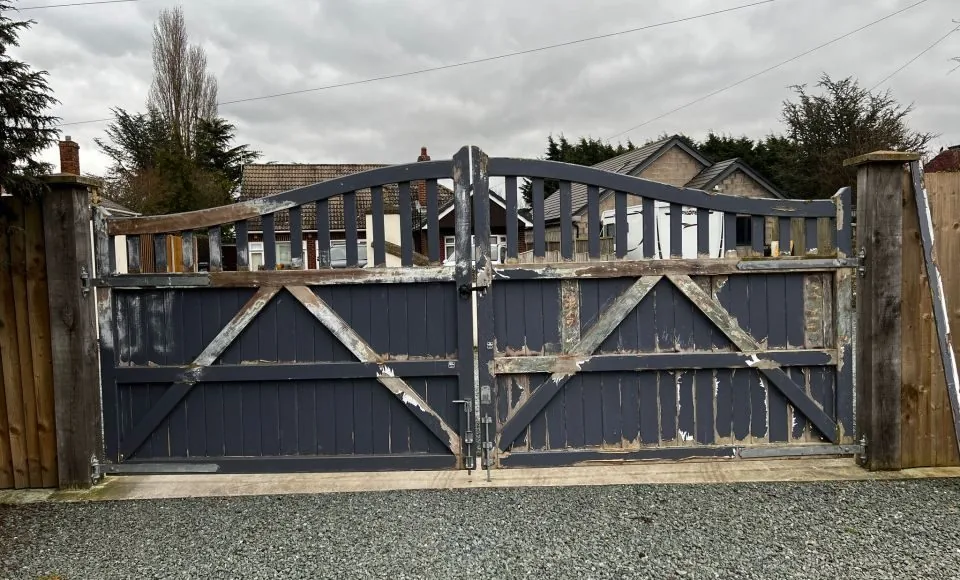
Multiple bespoke oak garden gates were restored to remove weathered grey patina and old finish, revealing the natural oak grain before a warm protective stain was applied.