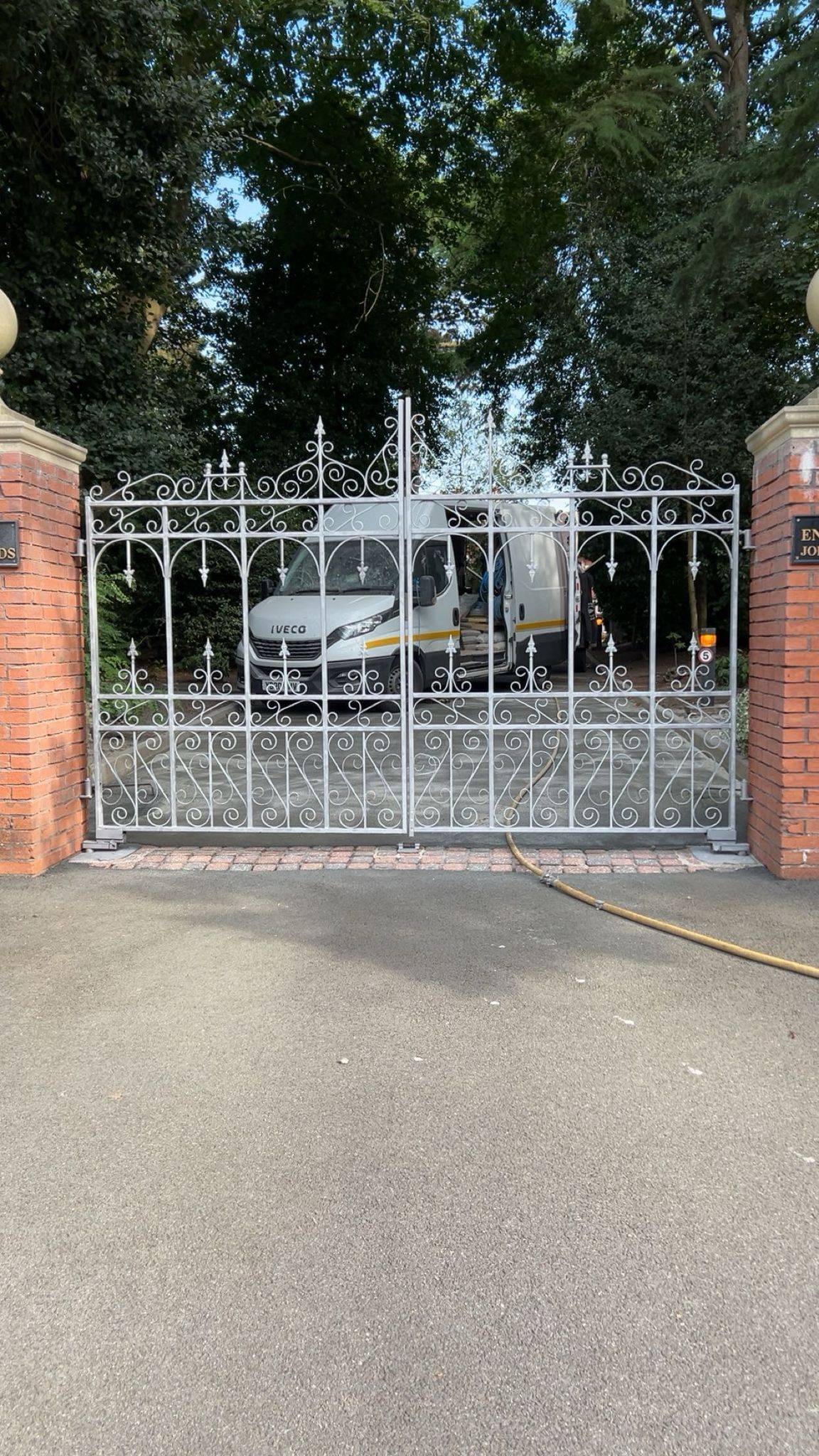
Sandblasting and surface restoration in TiptonSandblasting and surface restoration in Tipton
Tipton is a central Black Country town in Sandwell with canal heritage and active town-centre investment. Careful surface restoration starts with a site assessment because brick, metal, timber, render, mortar and existing coatings can respond very differently to blasting or other cleaning methods.
Tipton is recognised by Sandwell as one of its six towns, with a dedicated town profile and a separate local catchment.
The Factory Locks Conservation Area covers the canal network and former canal loop close to Tipton Station, creating a heritage-sensitive context for some canal-side and station-area properties.
Sandwell and WMCA describe current housing and public-realm investment in Tipton, including Union Street homes and improvements around Owen Street, the shopping precinct and canal walkway.
Choose the right method
Sandblasting and cleaning in Tipton
Council and WMCA sources describe town-centre regeneration, new housing, public-space works and a locally listed building project. This supports a mix of residential, property-management and commercial contexts, without evidencing any contract, local depot, guaranteed availability or prior local work. Brick cleaning is relevant to assessed masonry; gate sandblasting to suitable painted or corroded metal; oak-beam cleaning and staircase restoration are potentially relevant to older timber or mixed interiors only after close inspection.
Sandwell identifies Tipton Factory Locks as a conservation area covering the canal network and former canal loop near Tipton Station. The council says planning permission is required within conservation areas for works to alter or demolish a building; other consent or owner approvals may also be relevant depending on the building and proposed change. Record the exact address, whether the property is listed, locally listed or in a conservation area, and whether the work changes appearance. Sandwell reports active works around Union Street, Owen Street, the shopping precinct and canal walkway. For town-centre or canal-adjacent jobs, confirm parking, loading, pedestrian segregation, working hours, neighbours, dust/noise controls, runoff containment and equipment access before scheduling. Planning approval should not be presented as automatic.
Check permissions, listed status, site rules and environmental requirements before exterior work starts.
Start with the basics
What to send us.
Share the full address, photos and whether the job is inside, outside, canal-side or in an occupied premises.
Identify the substrate and existing finish: brick and mortar, painted metal, timber, render, paving or mixed fabric.
Check Sandwell's conservation-area map and heritage information; do not assume cleaning is exempt from all approvals.
Agree a small test area and confirm method, media, pressure, containment, water/runoff and protection for nearby surfaces.
For town-centre or regeneration-area work, confirm loading/parking, pedestrian controls, neighbours, working hours and safe equipment access before final scoping.
Approximate area centreTipton
Local questions
Questions about sandblasting in Tipton.
Can brickwork in Tipton be blasted?+
It may be possible in some cases, but brick hardness, fired face, mortar, previous coatings and weathering must be checked first. A test area and a lower-impact alternative may be more appropriate than a standard abrasive setting.
Does a Tipton conservation area mean I automatically need planning permission for cleaning?+
Not automatically for every cleaning activity. Sandwell says planning permission is required within conservation areas for works to alter or demolish a building. The exact proposal, building status and appearance change should be checked with the council or a suitably qualified planning adviser before work starts.
What should a property manager prepare for a town-centre or canal-side job?+
Provide the address, access constraints, substrate details and site photos. Allow for pedestrian/public-realm interfaces, loading and parking, dust/noise and runoff controls, neighbouring occupants, working hours and protection of paving, glazing, planting and canal-side surfaces.